MOOC PELCA
Videos were recorded in French but are also available in English via YouTube’s instant translation. Once the video has started, open Settings > Audio track and select “English”.
Introduction to PELCA
PELCA (Power Electronics Life Cycle Assessment) is an open-source project aimed at assessing the environmental impact over the life cycle of modular and diagnosable power electronics systems. The integration of modularity and diagnosability aligns with circular economy principles, promoting practices such as maintenance, repair and reuse. This project provides a tool to calculate the environmental impacts associated with the manufacturing, usage, and replacement of power electronics products.
Introduction
Messages & Perpectives
Installation
Follow the step-by-step installation of PELCA on your computer.
Windows
MacOS
Linux
Algorithm
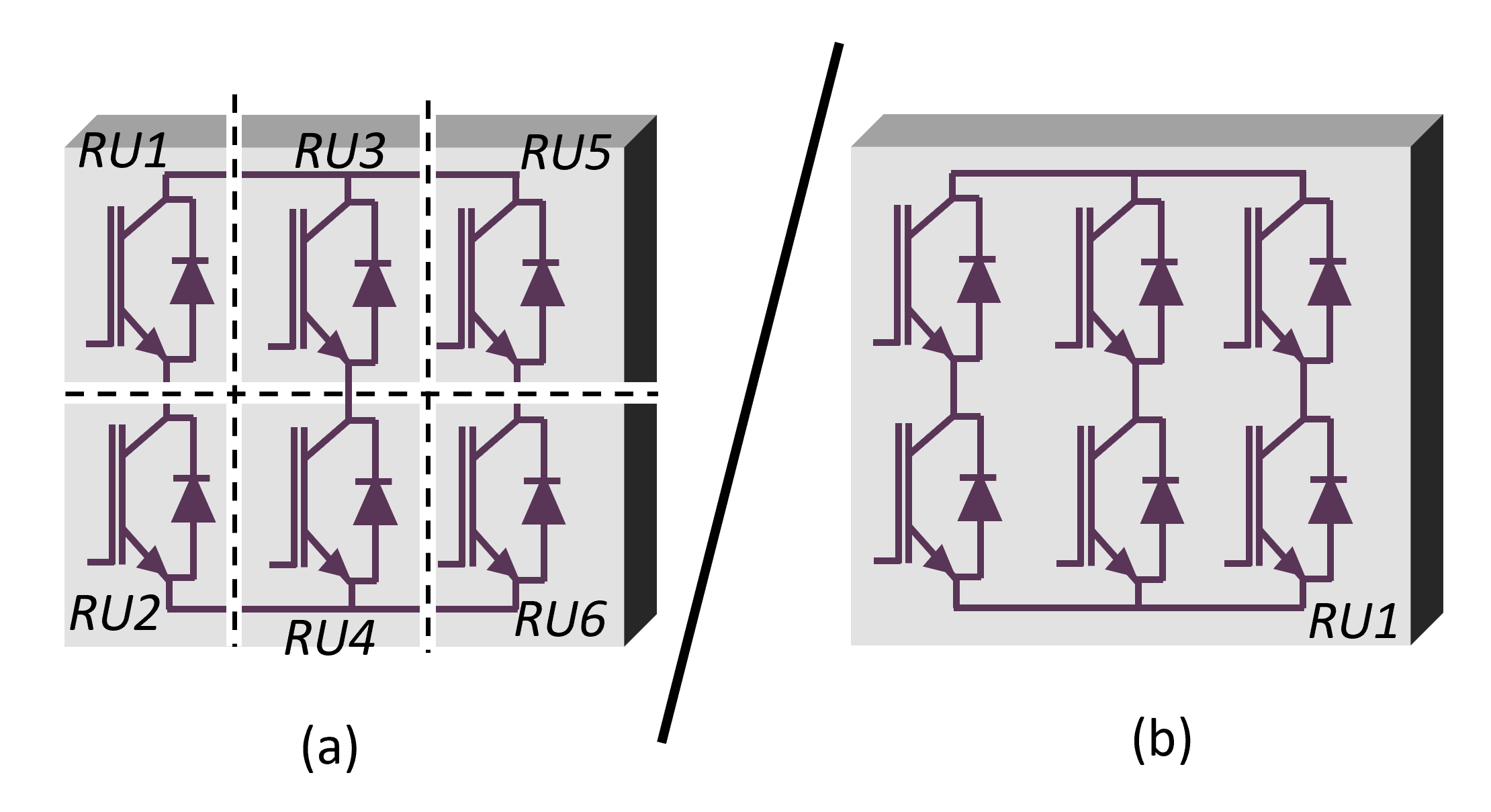
The PELCA algorithm is based on the concept of Replacement Unit (RU). It represents the maximum level of modularity of the system that can be dismantled and replaced; for example, a RU can be an integrated module or a discrete component (assuming they can be dismantled). When a RU is replaced, its age is reset to zero.
Consider the example of an inverter in Figure 1: in case (a), the inverter has 6 RUs, allowing to replace a specific power switch individually. In contrast, case (b) consists of a single RU-inverter, meaning that if a fault occurs, the entire system must be replaced.
Watch the video
Example: Inverter
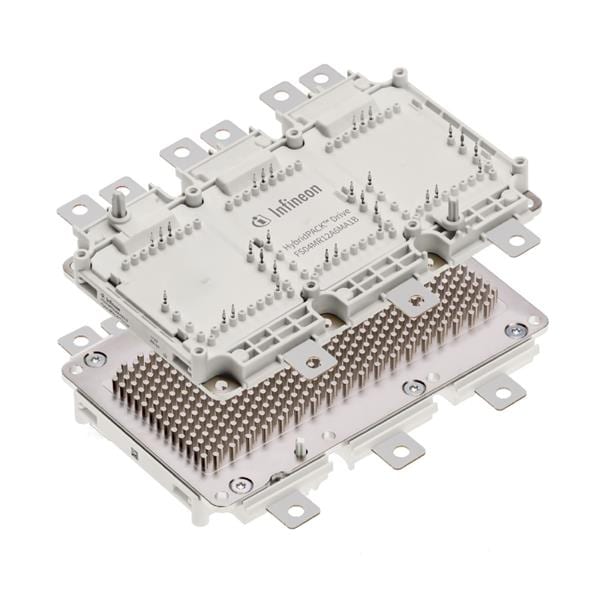
Inverter – FS820R08A6P2B
A power-electronic system including an IGBT power module (750 V, 820 A) and a DC‑bus filter capacitor.
Watch the video
Coming soon!!
Example: DC Breaker
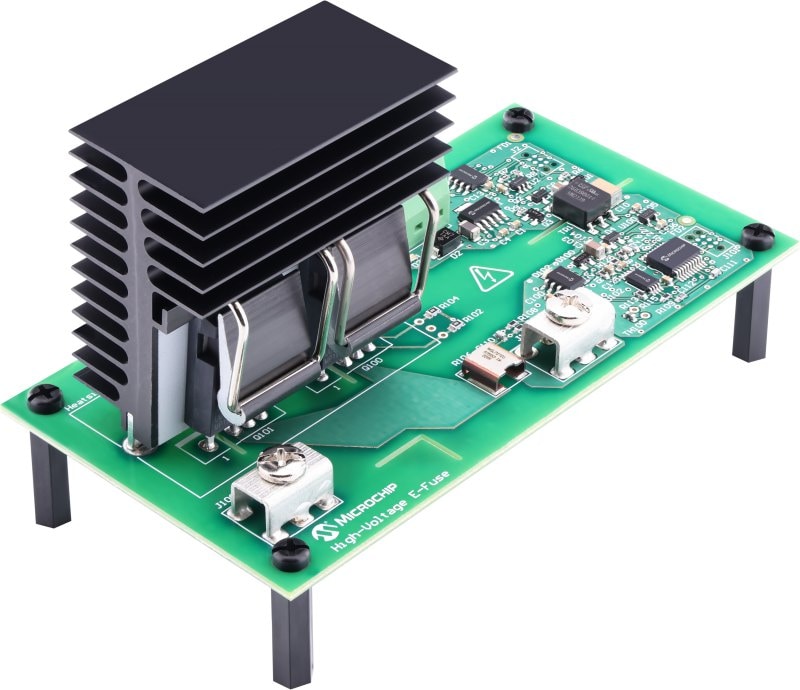
E-Fuse – MSCDR-EFUSE-006
DC static circuit breaker – SiC MOSFET transistor protection. 800 V/30 A demonstrator; 2 × MSC025SMA120B4.